If you want city energy without giving up water views, Baltimore’s harborfront condo lifestyle stands out fast. This part of the city offers a different kind of daily routine, where your morning walk can include the promenade, your errands may be a short stroll away, and getting around does not always require a car. If you are weighing whether harborfront living fits your goals, this guide will help you understand what day-to-day life really looks like. Let’s dive in.
What Baltimore’s Harborfront Really Means
When people talk about Baltimore’s harborfront condo market, they are usually talking about more than one neighborhood. The conversation often includes the Inner Harbor, Harbor East, Harbor Point, and nearby waterfront edges like Fells Point.
That broader definition matters because the lifestyle is shaped by a connected waterfront district, not just one condo building. According to Waterfront Partnership, this area functions as a mix of neighborhoods, parks, museums, historical sites, local businesses, and public waterfront space.
For you as a buyer, that means harborfront living is less about being tucked inside a single residential pocket and more about being part of an urban waterfront ecosystem. You are choosing a setting where residential buildings, dining, open space, and entertainment all sit close together.
Why the Harborfront Feels Different
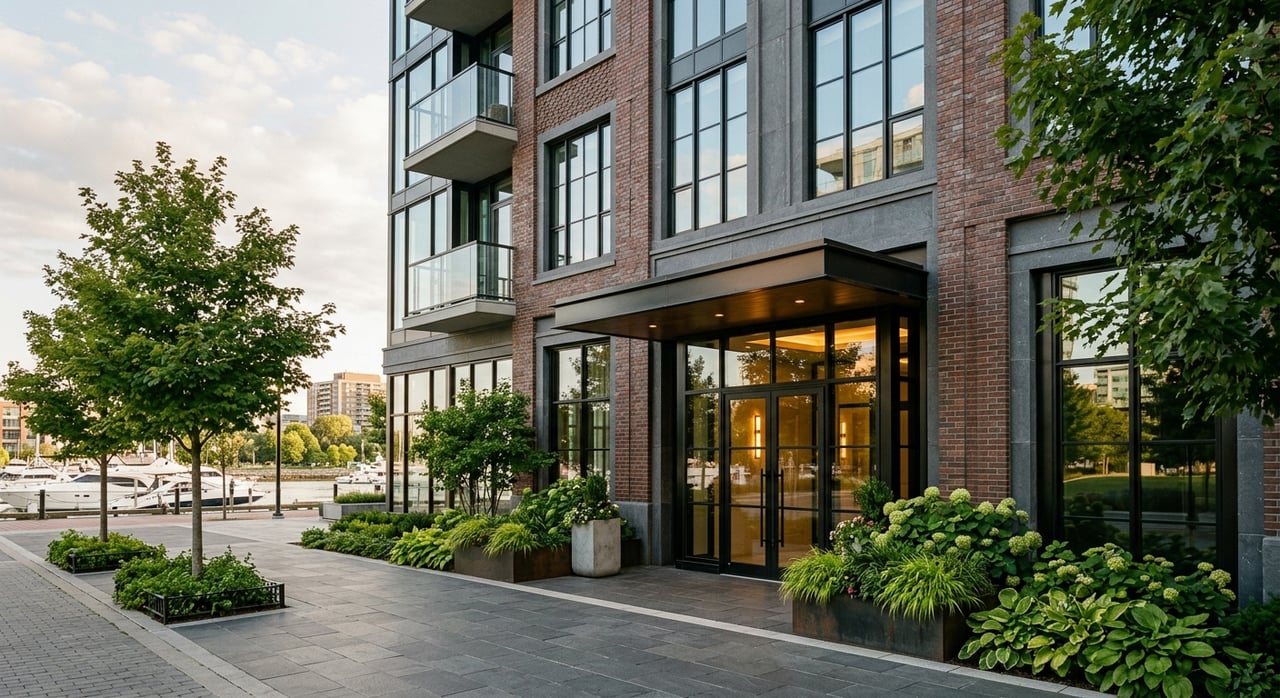
Baltimore’s harborfront offers a style of living that can feel more service-oriented and convenience-driven than a traditional neighborhood. Instead of prioritizing private yards and detached-home layouts, many buyers here trade for elevators, secure entry, parking, shared terraces, concierge-style services, and direct access to the waterfront.
That shift changes how your home functions in everyday life. Your building may provide part of the lifestyle through fitness rooms, package handling, lounges, or rooftop spaces, while the surrounding district adds parks, restaurants, and scenic walking routes.
In practical terms, you are not just buying a condo unit. You are buying into a combined building-and-neighborhood experience.
Walkability and Daily Errands
One of the biggest draws of harborfront condo living is how much you may be able to do on foot. Harbor East describes itself as a 12-block walkable district with shopping, dining, and views, along with easy access to groceries, coffee, fitness, lunch spots, and everyday services.
That can make daily life feel much more self-contained than in a car-dependent suburb. If your routine includes grabbing coffee, picking up groceries, going to the gym, or meeting friends for dinner, the harborfront can make those tasks easier to fold into your day.
The Inner Harbor adds another layer. Visit Baltimore highlights museums, historic ships, restaurants, scenic views, and water-based recreation, while the National Park Service describes the area as a hub for dining, shopping, and relaxation.
Public Space Adds to the Lifestyle
The harborfront is not only about what is inside the buildings. Public space plays a major role in how the area feels and functions.
Waterfront Partnership points to places like West Shore Park, which hosts events and free summer fitness classes, and Wills Park at Harbor Point, which offers lawn space and benches overlooking the water. Harbor Point itself includes 9.5 acres of open space and extends the Inner Harbor promenade along the water’s edge.
For you, that means the neighborhood can feel active without feeling closed off. Even if you live in a high-rise, nearby outdoor space becomes part of your usable living area.
Getting Around Without Relying on a Car
If you are hoping for a more car-light lifestyle, the harborfront is one of Baltimore’s strongest options. This area combines walking access with several transit choices, making it easier to move around the city in different ways.
Baltimore Water Taxi offers point-to-point service across the harbor and is designed to help riders avoid traffic and parking issues. Visit Baltimore notes that the Water Taxi connects more than 30 attractions and neighborhoods, although routes and schedules are seasonal.
For free local transit, the Charm City Circulator’s Orange Route runs from Hollins Market through Harbor East, with buses about every 15 minutes. Visit Baltimore also notes that MTA operates local and commuter buses, Metro SubwayLink, Light RailLink, and weekday MARC service between Baltimore and Washington, D.C.
Harbor Point reinforces that multimodal feel. Its access information notes on-foot and bike access, the free Charm City Circulator Orange Route, the free Harbor Connector, water taxi service, dockless scooters and bikes, ride-hailing, and 24/7 parking. It also lists a Walk Score of 88.
What Commuters Should Know
If your work takes you beyond the harborfront, the area still offers useful connections. MDOT MTA says the Penn Line runs primarily between Baltimore Penn Station, BWI, and Union Station in Washington, D.C., while the Camden Line operates from Camden Yards in downtown Baltimore and also serves Washington.
The state also notes that the Penn Line has more all-day service than the Camden and Brunswick lines, which are more peak-oriented. If you are comparing waterfront living with suburban options, this can be a meaningful advantage for some commuters.
That said, your exact routine will depend on how often you travel, where you work, and how you prefer to connect to stations. Harborfront living can support a lower-car lifestyle, but your best fit depends on your personal schedule.
What Harborfront Condo Buildings Are Like
Most harborfront condo buildings are vertical, amenity-rich, and often part of mixed-use developments. Harbor East’s residences page notes that many buildings include outdoor spaces, fitness rooms, and secure parking, and the neighborhood includes both owner-occupied and rental options.
That mix creates a housing stock that feels very different from classic Baltimore rowhouse neighborhoods. Instead of one dominant housing type, you will find condos, apartments, and hybrid buildings throughout the waterfront district.
For many buyers, the appeal is simplicity and service. You may have less private outdoor space, but more shared conveniences built into the property.
Common Amenities You May See
While each building is different, several amenities show up often in this part of the market:
- Secure entry and controlled-access parking
- Fitness rooms or fitness centers
- Outdoor terraces, balconies, or rooftop spaces
- Concierge or front-desk services
- Package rooms or package lockers
- Social lounges, business centers, or community rooms
- Pool decks or other shared recreation spaces
Some buildings go further with features like yoga studios, pet areas, valet parking, EV charging, rooftop dog parks, or resort-style pool areas. In the harborfront market, the amenity package can have a major impact on both lifestyle and price positioning.
Standard Comforts vs. Luxury Extras
Not every harborfront condo offers the same level of finish or service. Some buildings focus on core conveniences like secure parking, fitness space, and a well-kept lobby. Others raise the bar with floor-to-ceiling glass, private balconies, concierge service, valet, spa-style spaces, rooftop lounges, or premium shared amenities.
That is why it helps to think about the harborfront as a wide-ranging premium market rather than a single category. View, floor level, building age, parking setup, and amenity package can all shape your experience.
If you are shopping here, one of the smartest things you can do is separate your must-haves from your nice-to-haves. A building that looks impressive online may not match your daily routine as well as one with a more practical amenity mix.
How Prices Compare to the Rest of Baltimore
The harborfront is generally positioned above the citywide baseline, but it is not one fixed price tier. Live Baltimore’s January 2026 market study places Baltimore City’s median home value at $220,600, and Redfin’s March 2026 city snapshot puts the city’s median sale price at $240K.
By comparison, Harbor East and Harbor Point present themselves as premier or exclusive waterfront addresses. That supports describing the harborfront condo corridor as a premium slice of the city market, though individual pricing can vary widely.
For you, that means broad averages only go so far. Two condos in the same waterfront district may differ significantly based on building reputation, layout, water view, parking, services, and shared amenities.
Harborfront vs. Traditional Neighborhood Living
For many buyers, the real decision is not just condo versus condo. It is harborfront living versus a more traditional Baltimore neighborhood.
A classic rowhouse area often offers a different tradeoff. You may get a more house-oriented setup and a different street rhythm, but usually with fewer shared services and less of the vertical, amenity-based experience that defines the waterfront.
The harborfront, by contrast, is best understood as urban convenience plus water access plus shared amenities. If you value walkability, public waterfront space, service-focused buildings, and easier access to dining and entertainment, that combination can be very appealing.
If you prefer more private space and a less managed building environment, you may want to compare carefully before making a move. The best choice depends on how you want your home to support your routine.
Who Harborfront Condo Living Fits Best
Harborfront condo living can be a strong fit if you want:
- A walkable lifestyle with dining, errands, and entertainment nearby
- Access to waterfront views and promenade space
- A lower-car routine with transit and multimodal options
- Building amenities that reduce some everyday friction
- A more lock-and-leave style home than a detached house
It may be less appealing if your priorities center on private yard space, a larger standalone home, or a more traditional neighborhood feel. Neither option is better across the board. It depends on what matters most to you.
How to Shop Smart in the Harborfront Market
If you are considering a harborfront condo, focus on more than the view. The right unit is only part of the decision.
Pay close attention to the building’s access, parking setup, shared spaces, and how the surrounding blocks function on a normal weekday. A condo that looks ideal on paper can feel very different once you factor in your commute, your errands, and how often you plan to use the amenities.
It also helps to compare buildings through a practical lens:
- How easy is it to get groceries, coffee, or fitness access nearby?
- Do you want concierge-style services or just the basics?
- Is parking essential for your household?
- Would you actually use a pool, rooftop, or lounge?
- How important is a direct water view versus overall location?
When you answer those questions clearly, your search becomes much more focused.
If you are exploring condo living along Baltimore’s waterfront, working with a local team can help you compare buildings, lifestyle tradeoffs, and market positioning with more confidence. To talk through your goals or start your search, connect with Homestead Finders.
FAQs
What areas are usually included in Baltimore’s harborfront condo market?
- The harborfront condo market usually includes the Inner Harbor, Harbor East, Harbor Point, and nearby waterfront edges such as Fells Point.
Can you live on Baltimore’s harborfront without a car?
- In many cases, yes. The area offers strong walkability, free local Circulator service, water taxi access, Harbor Connector service, bike and scooter options, and nearby regional transit connections.
What amenities are common in Baltimore harborfront condos?
- Common amenities include secure entry, parking, fitness rooms, outdoor spaces, package handling, community lounges, and in some buildings pools, concierge service, valet, or rooftop features.
Are Baltimore harborfront condos all luxury properties?
- No. The market includes a range of buildings, from boutique owner-occupied condos to larger mixed-use and luxury-branded residences, though the area is generally positioned as a premium part of the city market.
How is harborfront condo living different from a Baltimore rowhouse neighborhood?
- Harborfront condo living is typically more vertical, service-oriented, and amenity-driven, while traditional rowhouse neighborhoods are usually more house-and-yard oriented with fewer shared building services.
Is Baltimore’s harborfront a good fit for commuters?
- It can be. The area offers access to local transit, water transportation, and regional rail options, including MARC service to Washington, D.C., though the best fit depends on your specific commute pattern.