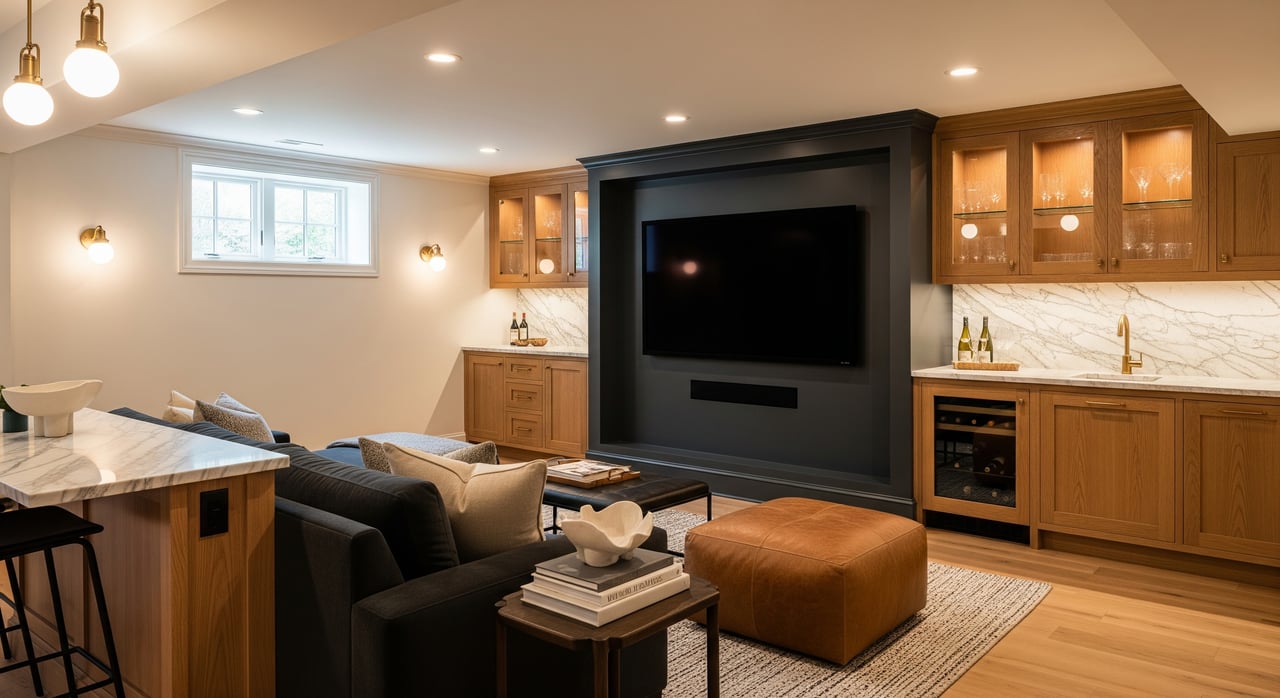
Thinking about how much a finished basement really matters in Bel Air? You are not alone. Many buyers here want usable lower-level space for family time, a home office, or guests, but they also look closely at safety, moisture, and permits. In this guide, you will learn what Bel Air buyers value, what to fix before you list, and how to evaluate basements during tours. Let’s dive in.
Why finished basements matter in Bel Air
Bel Air buyers often commute along the I‑95 corridor, so extra, flexible space at home is a real plus. A well-finished lower level can function as a rec room, office, playroom, guest suite, or media room. When it shows clean, dry, and comfortable, you increase your home’s appeal and broaden your buyer pool.
Quality matters. Permitted work that meets safety and building standards helps buyers, lenders, and appraisers feel confident. Poor or unpermitted work can slow a sale or reduce value. Your goal is to present a basement that looks great and passes practical and safety checks.
Permits and what buyers expect
What counts as permitted living area
In Harford County, buyers and appraisers put weight on whether a basement finish received permits and passed final inspections. Permits and approvals help confirm the work followed building, electrical, mechanical, and safety codes. This documentation limits surprises during appraisal, underwriting, and insurance review.
If you finished your basement in the past, pull together the permit numbers, final inspection sign-offs, and contractor invoices. If some work was done without permits, consider a retroactive permit if available, or plan to disclose. Clear records build trust.
Bedrooms, egress, and safety
If you plan to market a basement room as a bedroom, buyers expect proper egress. The International Residential Code requires an emergency escape and rescue opening for sleeping rooms. Egress windows and window wells must meet size and clearance standards, and wells may need a ladder and drainage. Many buyers and local MLS standards also expect a closet in a bedroom. Without proper egress, a room should not be used for sleeping.
Buyers also look for smoke and carbon monoxide alarms on each level and outside sleeping areas. New electrical work, HVAC modifications, and plumbing changes should be permitted and inspected.
What Bel Air buyers value most
Dry, odor-free baseline
A dry basement is essential. Red flags include musty odors, visible mold, efflorescence on foundation walls, water stains, rust on mechanicals, or active sump discharge. Address drainage, gutter extensions, and grading first. If you use a dehumidifier, keep it running and show the space is well-managed. Buyers often walk away or demand steep credits if moisture concerns are not resolved.
Light, layout, and comfort
Lower levels feel better when they are bright. Larger or cleaner window wells, light-colored paint, and layered lighting help the space feel open and welcoming. Egress windows often double as daylight sources, which is a win for safety and appeal.
Comfort matters. Buyers look for consistent heating and cooling with visible supply registers, a balanced layout that separates mechanicals from living areas, and enough headroom to use the space freely. A 7-foot ceiling height is a common target for habitable rooms under the IRC, with some exceptions for beams or ducts. Confirm local interpretations with Harford County.
Bathrooms, storage, and access
A half bath or full bath in the basement adds convenience and can be a strong selling point. These projects require careful planning for drains, venting, and permits. Beyond that, buyers appreciate dedicated storage, well-sized closets, and easy access to the furnace, water heater, electrical panel, and sump pump. Mechanicals should be accessible but not intrusive.
Red flags to watch during tours
Moisture and structural signs
Look for water stains, damp carpet, peeling paint, or efflorescence on walls. Check that the sump pump discharges away from the foundation and that exterior grading slopes away from the house. Bulging foundation walls, large cracks, or spalling concrete may warrant a structural engineer review.
If you see visible mold or smell persistent odors, plan for remediation and documentation. Buyers will ask for proof that the issue was fixed and the source controlled.
Electrical, HVAC, and ventilation
Scan for adequate outlets, GFCI protection near wet areas, and a modern breaker panel. Recessed lights should be properly rated where insulation is present. In finished spaces, you should see evidence of conditioned air and adequate capacity. Bathroom fans should vent to the exterior, not into the joist bay or attic. If a room is marketed as a bedroom, confirm you have compliant egress and an appropriate door and closet per market standards.
Smart upgrades before you list
High impact, lower cost
- Fix moisture issues first, including downspout extensions, drainage, and sealed penetrations.
- Brighten the space with LED recessed lighting, light wall colors, and clean window wells.
- Replace stained carpet with moisture-tolerant flooring such as luxury vinyl plank or an elevated subfloor system.
- Declutter and stage with a clear purpose, like a media room, office, or play space.
- Add functional storage using built-ins or closet organizers.
- Finish trim work and touch up paint for a consistent, polished look.
Bigger improvements that pay off
- Add or enlarge an egress window to convert a bonus room into a true bedroom. This can unlock buyer interest in guest suites or in-law setups.
- Install a half bath or full bath, keeping in mind permits and proper drainage.
- Extend HVAC or add a conditioned mini-split to improve year-round comfort.
- Upgrade partial finishes to full drywall for a more cohesive, above-grade feel.
Documentation that builds trust
Buyers want proof. Gather permits, final inspections, contractor invoices, waterproofing warranties, radon test results, and service records for HVAC and water heaters. Photos taken during construction that show framing, insulation, and vapor barriers can also help. Organized documentation can reduce negotiations and keep your closing on track.
Radon and indoor air in Harford County
Radon levels can vary across Maryland, and the EPA recommends testing every home, especially if you use the basement as living space or for sleeping. If radon tests at or above 4.0 pCi/L, mitigation is recommended. Learn more from the EPA’s guidance on radon testing and mitigation.
In our humid Mid‑Atlantic climate, moisture control is key to indoor air quality. A dehumidifier, properly vented bathroom fans, and sealed combustion appliances where applicable help maintain a healthy environment. A sump pump with a battery backup and a transferable waterproofing warranty, if you have one, can reassure buyers.
How buyers verify quality
If you are touring or under contract, use this quick checklist:
- Ask for the permit history and final inspection reports for the basement work.
- Review the seller’s recent inspection reports, if provided, and order your own home inspection.
- Request radon test results. If none exist, plan a test during the inspection period.
- Verify egress in any sleeping area and check window wells for clearance and ladders where needed.
- Confirm GFCI protection near wet zones and modern electrical panels.
- Look for evidence of conditioned space, adequate ceiling height, and balanced temperatures.
- Ask about the sump pump, backup power, and any waterproofing warranties.
- Review service records for HVAC and the water heater.
Appraisal and resale considerations
Appraisers typically value finished below-grade space, but often at a lower rate per square foot than above-grade area. The quality of finishes, the presence of egress, and how well the space functions like the rest of the home can influence adjustments. Unpermitted work may reduce appraised value or force concessions. Presenting a safe, bright, permitted basement with clear documentation supports both pricing and a smoother appraisal.
Work with a local guide
Bel Air and greater Harford County have their own norms for permits, egress, and what buyers expect in finished basements. If you are selling, we can help you prioritize pre-list projects that give you the best return. If you are buying, we will help you spot red flags and gather the right records so you can move forward with confidence.
Ready to talk basement strategy for your Bel Air home? Start with a quick plan and, if you are selling, a pricing path that reflects your lower-level’s true value. Reach out to Homestead Finders to get your Instant Home Valuation or schedule your free consultation.
FAQs
What should Bel Air sellers fix first in a finished basement?
- Tackle moisture control, then address lighting and flooring; document permits, radon results, and service records to build buyer confidence.
How do I know if a basement bedroom is legal in Harford County?
- Confirm a compliant egress window or exterior door, appropriate room size, and typical market standards like a closet; permits and final inspections should back up the work.
Do appraisers count finished basements the same as above-grade space?
- Appraisers value finished lower-level space, but often at a lower rate per square foot than above-grade; quality, access, and functionality can improve adjustments.
What basement red flags should Bel Air buyers watch for?
- Look for musty odors, water stains, efflorescence, rusted mechanicals, inadequate egress, low headroom, missing GFCI protection, and ventilation issues.
Is radon a concern for finished basements in Maryland?
- Yes; the EPA recommends testing every home, and mitigation is advised at or above 4.0 pCi/L; see the EPA’s radon guidance for details.
What documents should sellers provide for a finished basement?
- Permits and final inspections, contractor invoices, waterproofing warranties, radon test results, and HVAC or water heater service records help reduce friction during a sale.