Picture yourself stepping out to a waterfront promenade, coffee in hand, with downtown just a quick ride away. If you are weighing Canton, Fells Point, Harbor East, or Locust Point, you want clear facts about housing options, commute choices, and everyday lifestyle. In this guide, you will find realistic price bands, how to get around, and smart flood and insurance checks drawn from trusted local sources. Let’s dive in.
Waterfront neighborhoods at a glance
Canton
- Housing snapshot: Predominantly brick rowhouses from the late 19th and early 20th century, plus newer townhome infill and several waterfront condo complexes. Retail corridors and Canton Waterfront Park anchor the neighborhood.
- Price signals: Recent neighborhood snapshots show a median sale price around $369,500 as of Feb 2026 (Redfin). Current listings commonly range from the low $200Ks for smaller rowhouses to the high $600Ks and above for larger or waterfront units. Medians vary by data source and timeframe.
- Walkability and lifestyle: Central blocks are highly walkable with a strong mix of restaurants and services. Expect active evenings near the waterfront and Canton Square.
- Commute and transit: CityLink and LocalLink bus routes serve the area. Driving to central Baltimore is often under 15 minutes off peak. Seasonal water transit and local circulator options connect to the Inner Harbor. MARC service to DC runs from downtown stations.
- Practical notes: Many homes have basements and older systems, so you should budget for renovation or maintenance. Low elevations near the harbor can experience nuisance flooding on high-water days. Use the NOAA Sea Level Rise Viewer to understand local scenarios and tides.
Fells Point
- Housing snapshot: Historic 18th and 19th century rowhouses, cobblestone streets, and converted warehouse condos close to the water.
- Price signals: A recent median near $415,000 as of Feb 2026 (Redfin). A practical consumer range is often low $300Ks to mid $400Ks for typical rowhouses and condos, with premium waterfront or loft units trading higher. Medians vary by sample window.
- Walkability and lifestyle: One of Baltimore’s most walkable areas, with dining, retail, and nightlife steps from most doors.
- Commute and transit: Short walks to Harbor East and downtown. The Water Taxi stops at Broadway Pier and Maritime Park, and the free Charm City Circulator connects to Penn Station, the Inner Harbor, and nearby districts.
- Practical notes: The evening economy can be lively near restaurant corridors. Historic homes vary block to block in age and condition, so plan for careful inspections and system updates. Waterfront parcels are generally more flood-exposed than blocks further inland.
Harbor East
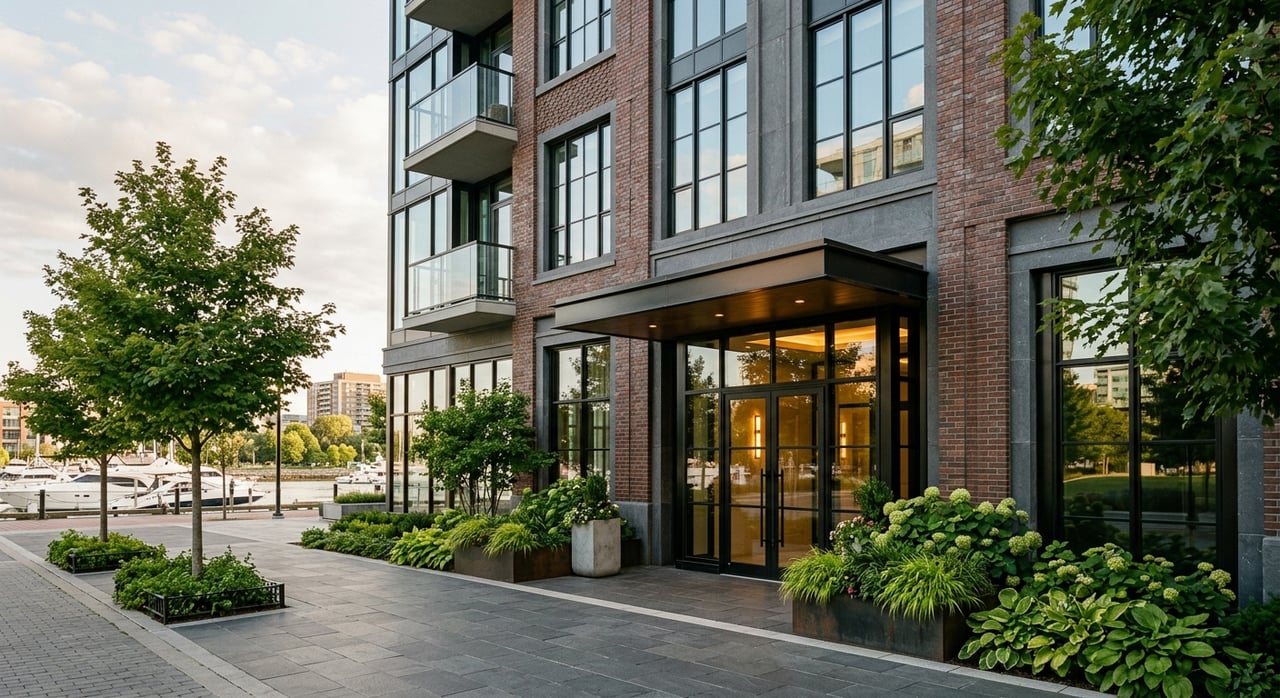
- Housing snapshot: Newer mid and high-rise condos and apartments with mixed-use retail and curated waterfront promenades. The housing stock skews luxury compared with nearby neighborhoods. You can get a feel for the area’s amenities on the Harbor East neighborhood page.
- Price signals and rents: LiveBaltimore’s 2025 neighborhood sales report places the median near the mid $400Ks (about $495K) and notes some of the highest rents in the city. See the LiveBaltimore 2025 Neighborhood Sales Report for details.
- Walkability and lifestyle: Very high walkability with Whole Foods, restaurants, hotels, and services clustered nearby. Good fit if you want built-in amenities and condo living close to downtown job centers.
- Commute and transit: Easy walks to many office districts. Nearby Light Rail and CityLink stops support downtown mobility, and Penn Station is a short drive for MARC or Amtrak.
- Practical notes: Expect higher condo HOA fees and limited on-street parking. Review condo documents early, including parking assignments, rental policies, and any special assessments.
Locust Point
- Housing snapshot: A mix of historic brick rowhouses, newer infill townhomes, and several waterfront condo complexes on the peninsula near Fort McHenry.
- Price signals: Recent neighborhood snapshots show a median around $391,000 as of Feb 2026 (Redfin). LiveBaltimore’s 2025 report, based on BrightMLS data, shows a higher median near $485K. Differences reflect sampling windows and product mix.
- Walkability and lifestyle: Moderately walkable and more residential in feel than Fells Point or Harbor East, with close access to waterfront parks and historic Fort McHenry.
- Commute and transit: A short drive or seasonal water-transit ride to downtown. The Charm City Circulator Banner Route and local MTA buses serve the neighborhood.
- Practical notes: Parking is generally easier than in denser harbor pockets, but it can be competitive on event days and near attractions.
Getting around: commute options
Your day-to-day travel will likely blend walking, biking, and short hops on city transit. Here is a quick cheat sheet with the most relevant services.
- MARC for DC commutes: Two commuter rail lines serve downtown Baltimore at Penn Station and Camden Station. Choose based on your DC job location and schedule. Review station details on the MARC station information page.
- Light Rail and buses: Light RailLink runs north-south with stops at Camden Station, Convention Center, and Lexington Market. Most harbor neighborhoods rely on CityLink and LocalLink buses for direct service. See the Light Rail stops and schedules for current details.
- Charm City Circulator: Free downtown routes, including the Banner, Orange, and Green lines, connect Harbor East, Fells Point, and Locust Point. Check the Circulator route map and hours before you ride.
- Water transit: The Baltimore Water Taxi operates year round on multiple lines and also runs the Harbor Connector commuter service on many weekdays. Verify route patterns and timetables on the Baltimore Water Taxi site.
Parking and driving
Driving to I-95, I-395, or the Fort McHenry Tunnel is straightforward from most south and southeast harbor neighborhoods. Expect congestion near tunnel approaches at peak times. Many blocks use on-street permit parking or garages. If you plan to rely on street parking, review the city’s Residential Permit Parking program requirements and fees through the Parking Authority of Baltimore City before you sign a lease or purchase.
Flood risk and insurance: what to check
Low-lying harbor blocks can experience nuisance or tidal flooding, and long-term sea-level scenarios matter for ownership costs. Your best move is to evaluate each property at the parcel level.
- Start with maps: Use NOAA’s Sea Level Rise Viewer to explore high-tide and long-term inundation scenarios in the Inner Harbor. For site-specific regulations or questions, contact Baltimore City’s Floodplain Management team via the Office of Sustainability page.
- Ask for documents: Request any elevation certificates, floodproofing details, prior flood claims, or historic flood photos from the seller or listing agent.
- Insurance details: Confirm National Flood Insurance Program eligibility and premium estimates for the exact address early in the process. Premiums can materially affect your monthly budget.
- Inspection team: Work with inspectors and engineers familiar with tide-driven and stormwater flooding in Baltimore, especially if the property has a basement or sits near the harbor’s edge.
What your budget buys on the harbor
These are practical, buyer-facing bands based on recent neighborhood medians and local snapshots. Always confirm current availability.
- About $250K to $400K: Interior rowhouses and smaller condos in Canton or Fells Point outskirts, plus smaller Locust Point units. Availability varies by month.
- About $350K to $550K: Many mainstream rowhouses and 1 to 2 bedroom condos in Canton, Fells Point, and Locust Point, with occasional Harbor East resales in older buildings.
- $550K and up: Larger townhomes, newer infill, and waterfront condos in premier buildings. Expect HOA fees and premium pricing. For area medians, consult the LiveBaltimore 2025 Neighborhood Sales Report.
How to choose your fit
- You want a lively, walk-everywhere scene: Fells Point and Harbor East put restaurants, retail, and waterfront promenades within a few blocks. Harbor East adds newer condo towers and on-site services.
- You value a classic rowhouse street grid with parks: Canton offers a wide spectrum of rowhouse sizes, a waterfront park, and short drives to I-95.
- You prefer a calmer, more residential pocket: Locust Point balances rowhouse blocks with newer townhomes and easy access to Fort McHenry and waterfront green space.
- You commute to DC: Favor neighborhoods with a straightforward trip to Penn or Camden Stations for MARC. Check the MARC station information page for schedules and station details.
Ready to map neighborhoods against your goals and budget? You can get local guidance, on-the-ground video tours, and clear pricing support with Homestead Finders. Our team pairs neighborhood expertise with a modern, high-touch process so you can buy with confidence along Baltimore’s harbor.
FAQs
What types of homes are common on Baltimore’s harbor?
- You will mostly find historic brick rowhouses, newer infill townhomes, and waterfront or near-water condos, with Harbor East skewing newer and more luxury-focused.
How do I commute from harbor neighborhoods to Washington, DC?
- Take MARC trains from downtown Baltimore at Penn Station or Camden Station; choose your station and line based on your DC destination and preferred schedule on the MARC station information page.
Are the Water Taxi and Harbor Connector reliable for daily commuting?
- Service operates year round with multiple lines, but routes and timetables vary by season and weekday; always confirm current schedules on the Baltimore Water Taxi site.
What should I review if I am buying a waterfront condo?
- Read condo documents early, including parking assignments, rental policies, reserves, and any special assessments; in Harbor East and similar buildings, HOA fees are a key budget factor.
How can I check flood risk for a specific property near the harbor?
- Start with NOAA’s Sea Level Rise Viewer for scenario mapping, then contact the city’s Floodplain Management team through the Office of Sustainability page for parcel-level guidance.
What are the parking realities in waterfront neighborhoods?
- Many blocks use Baltimore’s Residential Permit Parking system and some buildings rely on garages; review eligibility, documentation, and fees with the Parking Authority of Baltimore City before you decide.