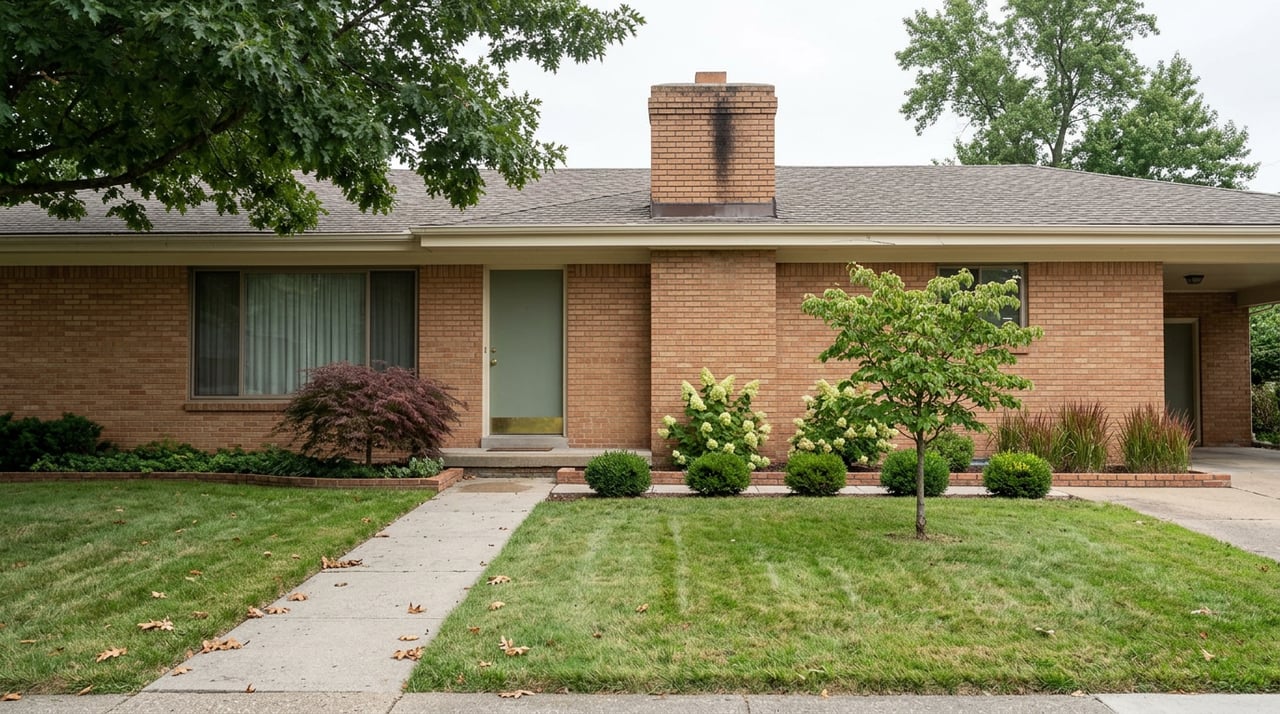
A homeowner in Crofton Meadows decides to sell. She calls the number on her HOA welcome letter, requests the resale disclosure package Maryland law requires, pays the fee, and assumes she is done. Three weeks later, her title company asks for a second package, this one from a completely different management company, covering a sub-association she did not know existed separately from the neighborhood she thought she lived in.
This is not a paperwork mistake. It is how Crofton is built.
Every generic guide to Maryland HOA resale law describes a single governing body, a single fee, a single clock. That framework works fine in a subdivision with one HOA. It does not describe Crofton, where a home can sit under two or even three layers of association governance at once, each one legally entitled to run its own resale disclosure process on its own timeline.
Crofton Was Built as One Community. It Isn't Governed as One.
Crofton started in 1964 as a planned community organized around the Crofton Country Club and the Crofton Parkway loop, a road that once had gates at its entrances before they were opened to the public. Over sixty years, the town grew section by section rather than as a single development, and the governance grew the same way. Today the Crofton Civic Association sits at the top as the umbrella organization for the wider 21114 zip code, but underneath it are dozens of section-level HOAs and condo associations, each with its own board, its own dues structure, and often its own property management company.
Crofton Meadows alone illustrates the pattern. Its own sub-association directory lists separately governed pieces with names like Bancroft Community, Blue Ridge, Habitat I Section A, Habitat I Section B, Jones Falls, Bryan Homes HOA, Meadowcroft, and Townhouse Associations 1 through 6, each handled by a different manager, from ProCom to Brodie Management to Condominium Management Inc. to MRA Property Management. A resale in one of these pockets can mean requesting documents from a sub-association manager who has never heard of the Civic Association's paperwork, and vice versa.
That is before you get to Crofton's other named sections. Long-standing neighborhoods like Town Center, Nantucket Mews, and Conaways sit alongside newer additions like Crofton Village and Walden, and the Fairways, each carrying its own set of covenants layered on top of whatever the Civic Association requires. A seller's first job is not filling out a form. It is figuring out how many forms exist.
What Maryland Law Actually Promises You
The state framework itself is straightforward, and it assumes exactly one governing body per transaction. Under Maryland's Homeowners Association Act, codified at Real Property section 11B-106, a sale cannot close without the required resale disclosure package. Here is what that package is supposed to look like on paper:
| Requirement | Standard timeline or cap |
|---|---|
| Time to prepare package after written request and fee | Up to 20 calendar days |
| Standard preparation fee | Capped at $250 |
| Optional rush delivery (14 days) | Up to $50 extra |
| Optional rush delivery (7 days) | Up to $100 extra |
| Optional inspection fee (HOA) | Up to $50 |
| Package delivered to buyer before closing | At least 15 days |
| How long a completed package stays valid | Around 30 days |
Those numbers work cleanly when there is one association to contact. In a two-tier Crofton section, a seller is effectively running two versions of this table at once, on two separate calendars, with two separate checks. If the Civic Association's package comes back in 12 days and the sub-HOA's comes back in 19, the seller's actual readiness date is set by the slower of the two, not the faster one.
The Inspection Attached to the Paperwork
Requesting the package is not paperwork alone. A standard part of a Maryland HOA resale package includes an on-site inspection of the property to confirm it complies with the association's architectural rules and that assessments are paid current. Based on that inspection, the package comes back with either a Letter of Compliance or a Notice of Non-Compliance.
This matters more in Crofton than in a newer, single-HOA subdivision because of the age spread across sections. The original 1960s and 1970s sections closest to the Country Club hold Crofton's oldest housing stock, split-levels, ranchers, and colonials now well past the half-century mark, often with mature trees and landscaping that can obscure the kind of deferred exterior maintenance an inspector is trained to flag. The 1980s and 1990s expansion sections, including parts of Crofton Village, the Fairways, and Walden, are now entering their own thirty-to-forty-year renovation window. A seller who assumes a quick visual check will pass may be surprised by a Notice of Non-Compliance tied to something as ordinary as an unpermitted fence line or a deck that predates current setback rules, and in a two-association property, that notice can come from either layer independently.
Why the Second Package Costs You Time, Not Just Money
The part of the framework sellers underestimate is the roughly 30-day shelf life on a completed resale package. If a Crofton sale stalls while a second association's paperwork catches up, or while a compliance issue gets resolved, the first package can expire before closing. At that point the seller is not just waiting. They are paying the preparation fee again and restarting a clock that was already running slow.
This is the actual mechanism behind a claim that sounds abstract until you see it in a contract: Crofton's layered governance does not just add a phone call, it adds real risk of a timeline resetting itself in the final weeks of a sale, at the seller's expense, at the exact moment buyers are least patient.
A Practical Order of Operations for Crofton Sellers
The fix is sequencing, not more paperwork. Before listing, a Crofton seller should:
- Confirm in writing which section-level HOA or condo association, if any, sits beneath the Crofton Civic Association for the specific address, since welcome letters and mailing lists are not always reliable guides to the legal structure
- Identify the management company for each layer separately. A property in a Sentry Management-administered section, for instance, is billed and inspected differently than one under ProCom or MRA Property Management, even if both sit inside greater Crofton
- Request both resale packages in the same week, rather than waiting for a buyer to ask, so the 20-day clocks run in parallel instead of one triggering after the other
- Ask each association directly about any pending or recently passed special assessments for shared infrastructure like roads, common areas, or the clubhouse, since these show up in the disclosure package and can otherwise surprise a buyer late in negotiations
- Budget for the possibility of two preparation fees rather than one, and build a buffer into the closing timeline in case a compliance inspection turns up something that needs to be cured before either association will issue a Letter of Compliance
One clarification worth making early: membership in Crofton Country Club itself is a separate, voluntary arrangement from mandatory HOA obligations. The club's own materials describe member privileges without a mandatory-assessment structure tied to homeownership, which means living near the club does not automatically mean paying club dues, even though the neighborhood's original sections were built around it. Sellers in those original sections should not assume the club's billing has any bearing on their HOA resale package.
A Few Questions Crofton Sellers Ask
Does every Crofton address have a sub-HOA on top of the Civic Association? No. Some sections answer only to the Crofton Civic Association, while others, particularly the ones built out in stages like Crofton Meadows and Walden, carry an additional layer. The only reliable way to know is to check the deed and covenants for the specific address rather than assuming based on the neighborhood name.
How early should I request the resale package if I think there might be two layers? As soon as you decide to list, not after you accept an offer. With a 20-day preparation window per association and a 30-day validity period once issued, starting early is the only way to avoid a package expiring before closing.
Is a Notice of Non-Compliance a deal-breaker? Not usually, but it needs to be resolved before closing in most cases. Addressing an architectural violation before the inspection, rather than after, avoids adding another round trip to an already layered timeline.
Selling a home in a neighborhood built this way rewards sellers who understand the structure before they list, not after a title company sends back a confused email. If you are weighing a sale in Crofton and want a straight answer on which layers of paperwork apply to your specific address, Homestead Finders can walk through it with you before you put a sign in the yard.